
How to Give a Photograph Depth With Foreground and Layers
Use overlap, scale, framing, and a clear middle distance to make flat scenes feel more like places you can enter.
 FilmFX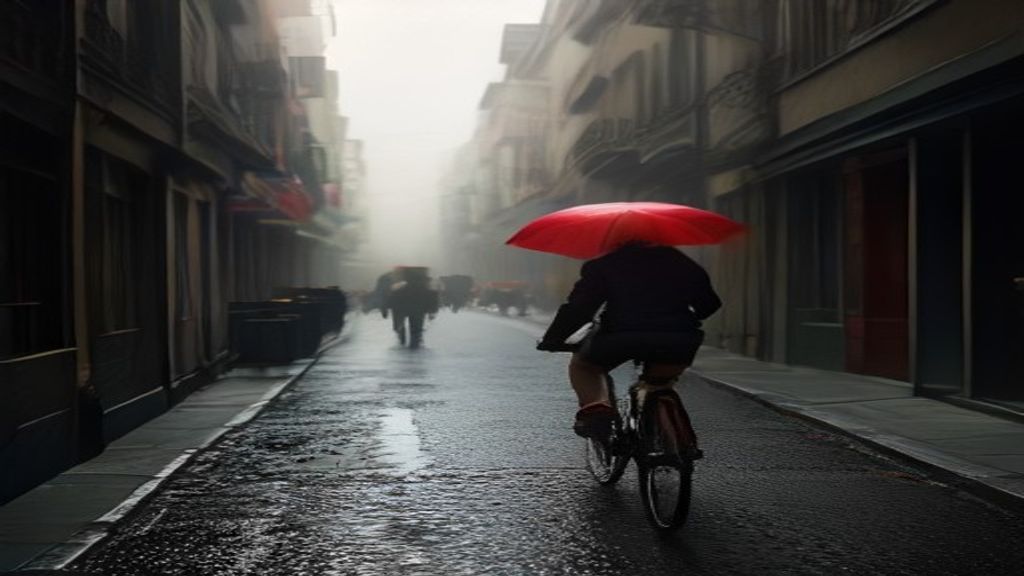
Many photographs feel flat because every important object sits at roughly the same distance from the camera. The scene may be beautiful, but the picture reads like a wall.
Depth does not require a wide-open lens or heavy background blur. It often comes from a simpler cue: one thing is clearly in front of another.
Build three distances, not three subjects
Think in foreground, middle distance, and background. Each layer does not need its own main subject.
A doorway can be the foreground, a person crossing the street can occupy the middle, and the buildings can form the background. The person is still the subject; the other layers explain where they are and how the viewer enters the frame.
If all three layers demand equal attention, simplify. Depth should organise the picture, not turn it into a scavenger hunt.
Use foreground as an edge, not a curtain
Photograph past a wall, plant, shoulder, umbrella, car window, or patch of shadow. Let it touch one edge of the frame and point attention inward.
The foreground can be out of focus, but it should still have a recognisable shape or color. A large shapeless blur covering half the picture often feels accidental.
Move a few centimetres left and right. Small movements dramatically change how much foreground is visible and whether it overlaps the subject.
Overlap tells the eye what is closer
When two objects barely touch, the frame can feel awkward. When one clearly overlaps the other, the distance relationship becomes obvious.
Watch the outline of your subject. A pole touching the side of a face or a tree growing from a head is distracting because the overlap is unclear. Either separate them or overlap with enough confidence that the layers read deliberately.
This is one reason street photographers keep moving after finding a scene. The background may be fixed, but one step changes every relationship inside it.
Scale is a depth cue
Repeated objects become useful when they change size with distance: street lamps, chairs, windows, people, or trees. The nearest one appears large and the later ones get smaller, giving the eye a path into the photograph.
A moderate or wide lens makes this size difference more obvious when you move close to the foreground. A longer lens compresses the layers, which can be useful when you want patterns to stack tightly.
Keep a middle distance
A common mistake is placing one object very close to the lens and everything else far away. The gap between them feels empty.
Look for a bridge: a person, pool of light, table, road marking, or repeated shadow halfway into the scene. The middle distance keeps the viewer from jumping straight from foreground to horizon.
Focus where the meaning is
The foreground does not automatically need to be sharp. Focus on the part that carries the story. If the subject is a person in the middle distance, let the near edge soften. If texture in the foreground is the reason for the picture, stop down and keep more depth.
Do not blur the background by habit. Sometimes the background is what makes the gesture funny, lonely, crowded, or specific to that place.
Leave one quiet area
Layered photographs need somewhere for the eye to rest. A dark doorway, plain wall, open sky, or unoccupied patch of pavement can provide that pause.
Before pressing the shutter, scan the four corners. Removing one bright distraction from an edge often improves depth more than adding another foreground object.
A simple exercise for your next walk
Choose one ordinary location and make five photographs without moving more than ten metres:
- One with no foreground at all.
- One framed through a doorway or window.
- One using an out-of-focus object along one edge.
- One with a clear foreground, middle, and background.
- One where repeated objects shrink into the distance.
Compare them later at thumbnail size. The strongest depth should still be visible before you notice fine detail. Color and film treatment can reinforce the layers, but the spatial relationship has to be present when you take the photograph.
Once the layers already work, try the cinematic photo filter at moderate strength and check whether quieter color helps the eye travel through them.